The Jewel of the South
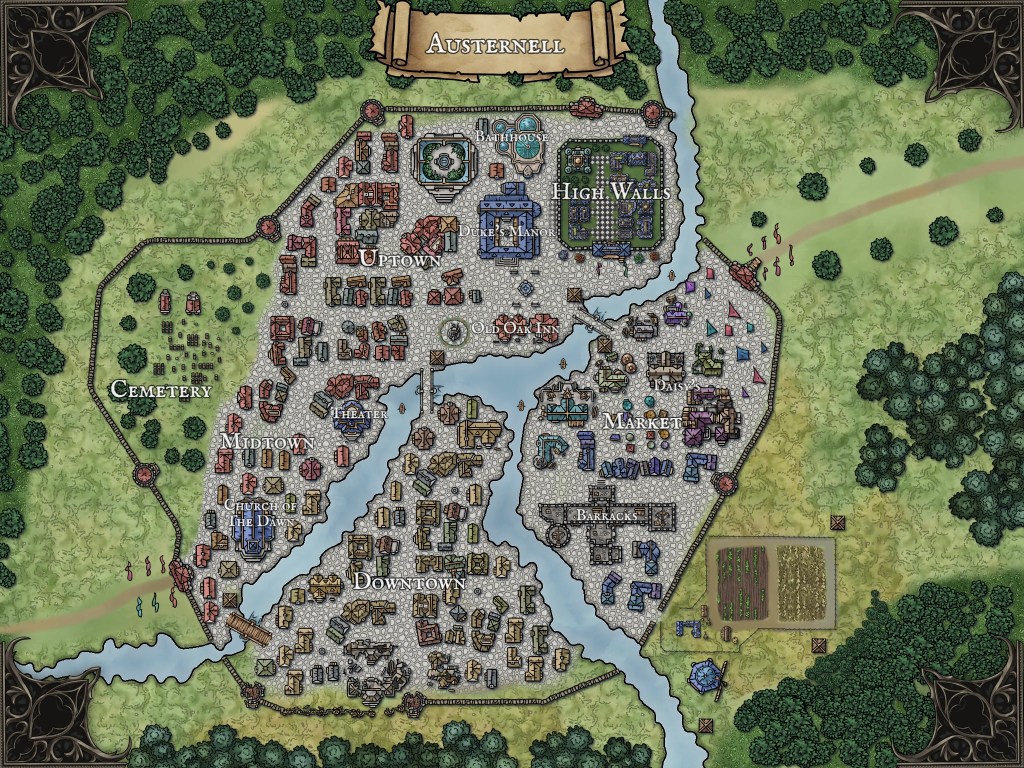
Map of Austernell
History of Austernell

Prior to the fall of Strovia, the camp of Austernell was established by the order of King Esteban in the year 854. The location was selected because of the rich mineral deposits in the Pannesian mountains with river access to both the Great South Sea and the Bay of Ersi. In the span of ten years the camp was fortified, providing access to coal for the people of Strovia to the west and precious stones which Esteban gave as tribute to the magicians of Ellystria to the east. Historians teach that Austernell is named the Jewel of the South, because the gems that were mined solidified the cooperation between Strovia and Ellystria. The alliance formed between the two nations yielded a golden age of prosperity for both kingdoms. Strovian shipments were often raided by the pirates of the island of Traist, both for coal and treasure leading to the first contests between the pirates and the King’s Royal Navy.
After the fall of Strovia in 1301, Austernell fell into disrepair without the support of the kingdom. Many families fled by boat down the river until they reached the sea, fleeing to the island of Traist while others chose to return to Strovia. The remaining people of Austernell retreated into the caverns of the mines, unable to defend themselves without walls or manpower to protect them from the dangers of the wilderness. In 1306, refugees from a small village in southwest Strovia departed south to escape the curse of the goddess following the Binding of the Wind. They brought with them food, supplies, animals, and tradesmen and journeyed to Austernell where they rebuilt the walls and established the town. The elves of Ma’Raelia brought word to the southern elven city Illi Ahn of the plight of Austernell, leading to an alliance between the two cities. The elves sought to re-establish the mining operations in the mountains offering food, transport, and finished goods.


In the 1350s, Austernell’s shipments were disrupted by regular attacks from the pirates of Traist. Without the King’s Royal Navy for protection, there was little that could be done to repel their raids. The remnants of the King’s army in the fortress of Ayrengard established roads for trade by land and fortified the coastal city of Illi Ahn against attacks from the sea. Traist’s efforts to raid the mainland were decisively repelled by Ayrengard’s armies, who soon constructed a small fleet of ships to patrol the coastline and establish safe water travel with rare successful pirate attacks.
In the 1400s, Austernell flourished under the protection of Ayrengard and cooperation with Illi Ahn. Roads and highways were built to connect the city with Cerr Nyel and De Norilan. Now, the mining industry of Austernell supported the development of the League of Allied Cities. As commerce increased, so did the wealthy upper class who orchestrated and managed trade between the cities of the League. The wealthy citizens established the thriving urban districts of Uptown and Midtown north of the river. In 1438, the theater was constructed with donations from wealthy investors. In 1455, the High Walls neighborhood was built. The southern Downtown district became largely comprised of the poorer working class that worked the mines and the farms. In 1479, the Church of the Dawn was built by the citizens of Austernell as a means for the city to care for its sick and poor.

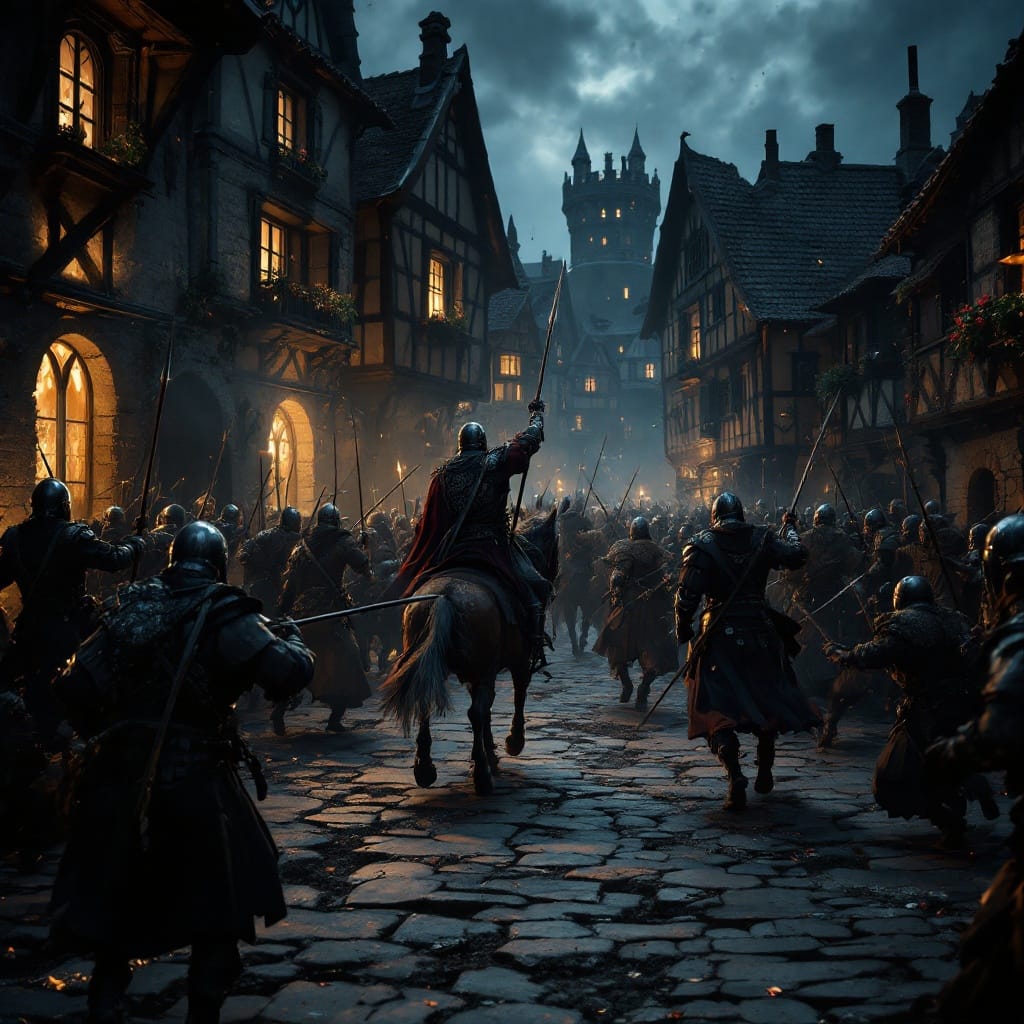
In 1487, a series of brutal killings shocked the Downtown streets, perpetrated by a man named “The Bloodletter” or simply “The Killer of Downtown.” Rumors began to spread that the southern districts were becoming lawless and depraved. Fearing that the violence would spread into their neighborhoods, commerce across the river was suspended, and many men in Downtown lost their livelihood. Crime began to rise with theft and vandalism spilling into the north city. The wealthy citizens of Midtown and Uptown demanded that the captain and his guards raid the Downtown district and restore order. The results of the raid were hundreds of dead citizens in the south before the guards retreated at the captain’s order. That day was named “The Black Parade” by the citizens of Austernell and signaled the complete breakdown of relations across the river. Shortly afterward, a gang known as “The Bravos” appeared in the Downtown streets, sworn to kill any of the captain’s guards who crossed the bridges. In 1497, the city is on the brink of civil war as the Bravos gang plots their revenge and rumors have begun to spread that the Killer of Downtown has struck again. This is where our story begins.
Locations
After the first Church of the Dawn was established by the elven priest Antal De’Luvian in Cerr Nyel, other churches were built in cities throughout the League. In 1479, The Church of the Dawn in Austernell was established by Patrice Caruso, a native of the city and friend of Brother Antal. The Church was constructed by the people of Midtown and Downtown, who provided their own money and labor, finishing it in two years. The church serves to care for the poor, the needy, and the sick in both body and spirit through the volunteer efforts of its patrons. As the conditions in Downtown deteriorated, the church became a refuge for the poor and neglected people south of the river. Those sympathetic to the plight of the south city offered their time and talents to any and all who sought relief, regardless of background. To preserve the church’s mission, the captain of the guard ordered that no patron of the church should be arrested when crossing the south bridge from Downtown. The needs of the people of Downtown became greater than the volunteers of Austernell could support, leading to a petition for help from the churches in Aszhnasz and Cerr Nyel. It was in answer to this petition that Dara Griffonheart was tasked to bring alms to the city.


The Sparrowsong Theater was built in 1438 in honor of Helen Sparrowsong, a legendary musician and stage performer from De Norilan. It was at her request that architects from Helesia crafted the designs for this magnificent hall, and the elves of Illi Ahn crafted the priceless Ethereal Diadem, the magical chandelier above the stage. Helen traveled throughout the enchanted land of Helesia, seeking artists who grew tired of performing for the impossible-to-impress faery nobility. She gathered a legendary ensemble of the finest musicians, actors, and dancers who left the faery kingdom to bring the beauty of the stage to the eager audiences of this quiet mining town. When asked why such a magnificent hall should be built in such an uncultured and unassuming locale, Helen replied, “If we can teach the craftsmen what dreams are made of, they will build them and make them real.” From 1440 to 1487, the theater was a spark of light in the coal-covered streets of Austernell, until the Black Parade divided the city, driving many of the talented performers and stagehands from Downtown into hiding. In these trying times, the theater has been a beacon of hope, where the people from both sides of the river can put aside vendettas to craft something beautiful together.
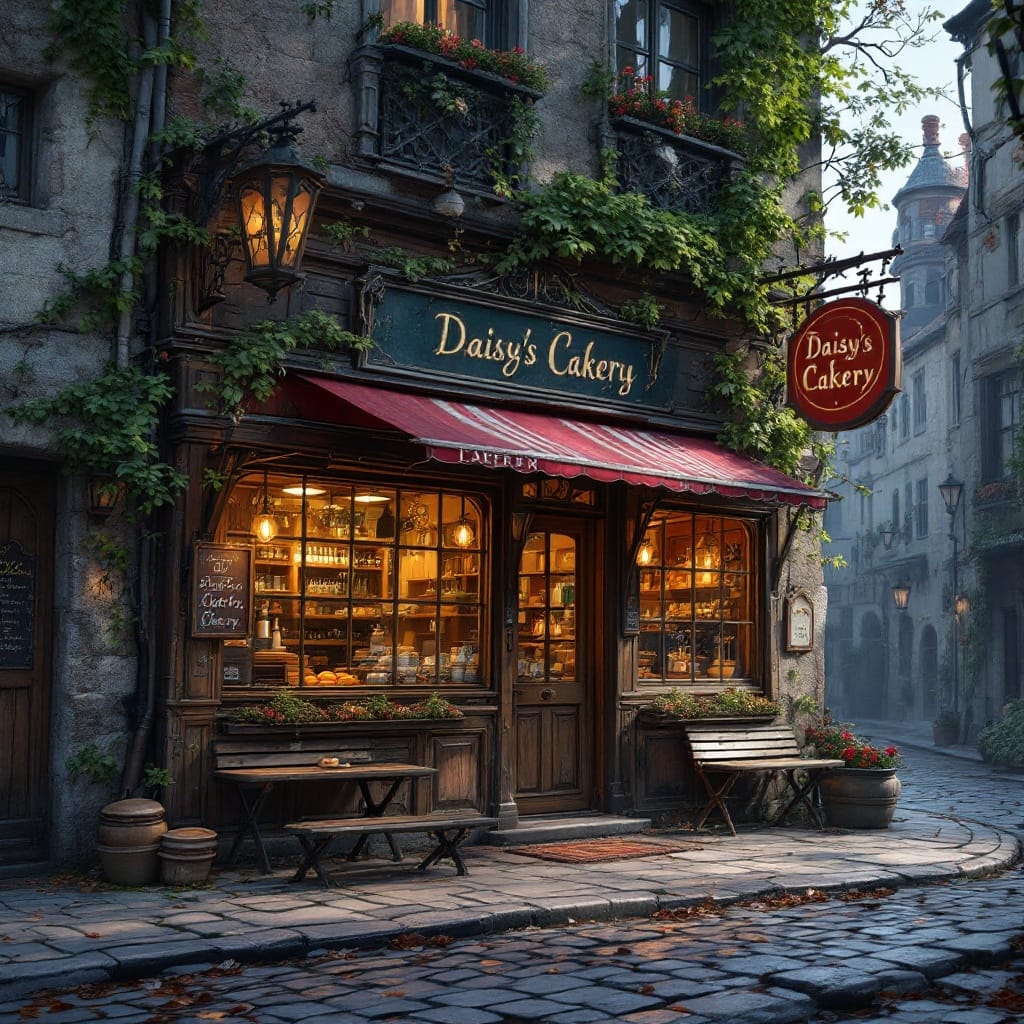
Nestled in an unassuming corner of the square of the market district, you can find a bakery that would be the envy of King Darien III himself. In 1495, Daisy’s Cakery opened its doors, staffed by a delightful young girl of only ten years old. Daisy crafts her scrumptious treats with passion and love, savoring the satisfaction of her customers as much as she does the treats themselves. To the average citizen, Daisy’s cupcakes, pastries, and candies seem like sweets of surprising quality from a chef so young. To the discerning palette, these treats are elevated with rare ingredients, spices, and delicacies from faraway lands. Daisy strives every season to craft new selections to tantalize the tongue, serving the sweetest sensations, and creating colorful candies to excite the eyes as much as the tastebuds. While some may balk at the high price of her customized creations, even the Queen of Helesia would consider herself spoiled to dine on Daisy’s delightful desserts.
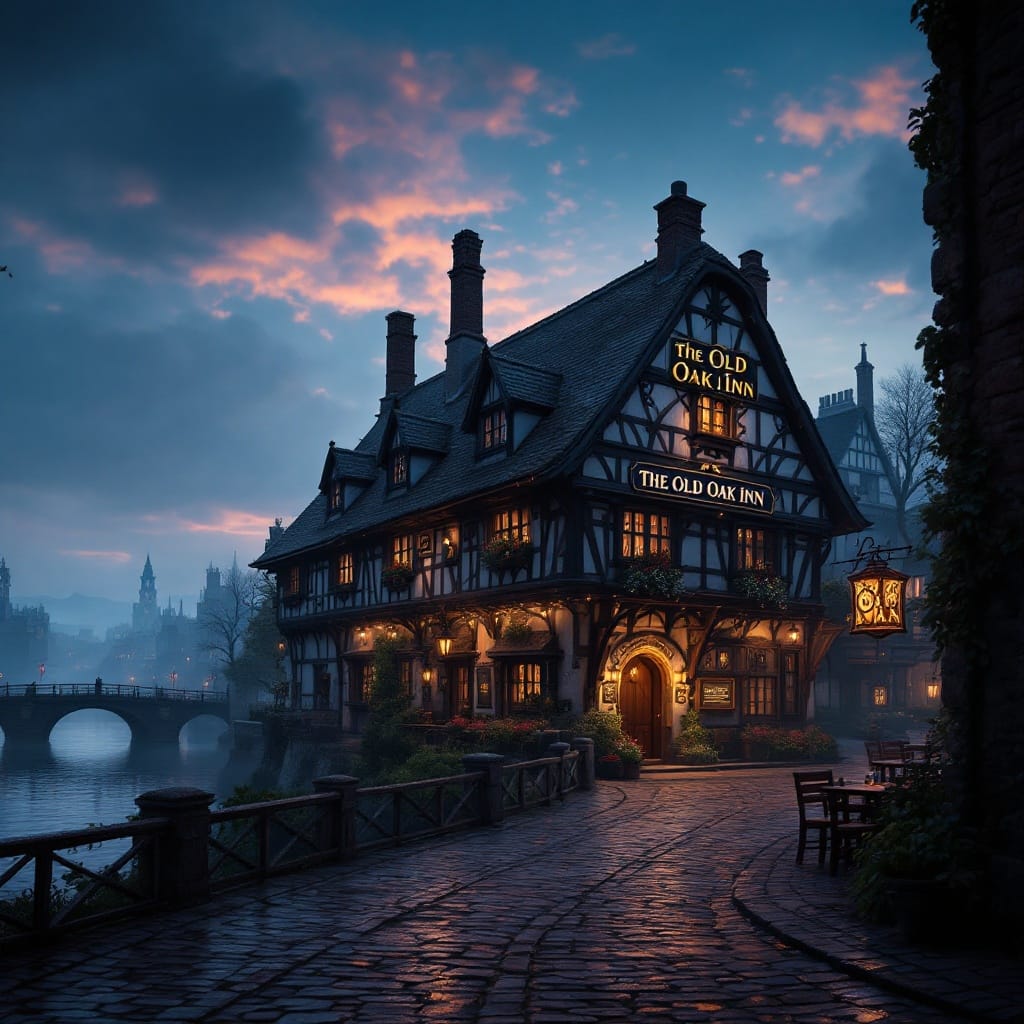
The Old Oak Inn was built in 1315 making it one of the oldest structures in Austernell. In its lifetime, the Inn has undergone numerous renovations and expansions, changing owners about every 25 years. Conveniently located on the riverside beside the Uptown Bridge, it has served as a popular place for food and drink for miners returning home at the end of the day.
 Armor of Sorrow